Be yourself; Everyone else is already taken.
— Oscar Wilde.
This is the first post on my new blog. I’m just getting this new blog going, so stay tuned for more. Subscribe below to get notified when I post new updates.
Be yourself; Everyone else is already taken.
— Oscar Wilde.
This is the first post on my new blog. I’m just getting this new blog going, so stay tuned for more. Subscribe below to get notified when I post new updates.

Group : BA118J
NAME : AMIR ASYRAF UED 102
MATRIC NUMBER : 2019209842
INTRODUCTION
Hello, I want to tell you a little about myself. My name is Amir Asyraf Bin Rafar and you can call me Amir. I’m a student at Uitm Lendu and my course is Office Management. The reason why i’m writing this portfolio because this is my assigment that was given by my lecture, Miss Afrah. The title for this portfolio ued 102 is about study skills. I think every student must learn study skills to face their problems whether in school or university. If you want to learn more about study skills you can read my portfolio that i will discuss about it. Enjoy reading.
STUDY SKILLS (UED 102)

TOPIC 1 – GETTING READY TO LEARN
ACTIVITY 1 – LEARNING STYLE INVENTORY

In fact, we all learn through a combination of these learning styles. So whatever your currently preferred learning style, the more you can develop skills in all three areas, the easier and more successful your studies will be.
VISUAL TYPES

Those with a visual learning style prefer using images, pictures, colours, and maps to organise information and communicate with others. You can easily visualise objects, plans and outcomes in your mind’s eye. One method of developing visual skills is by using coloured pens and highlighters for the main points or using different coloured paper or file dividers for different topics or tasks.


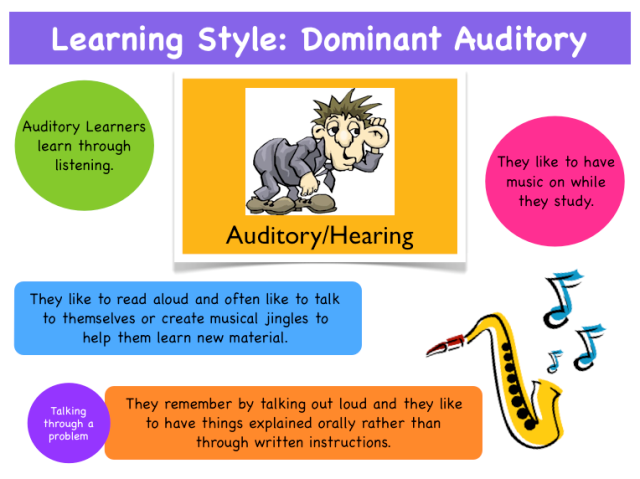
AUDITORY TYPES
KINESTHETIC TYPES


MY LEARNING TYPE:
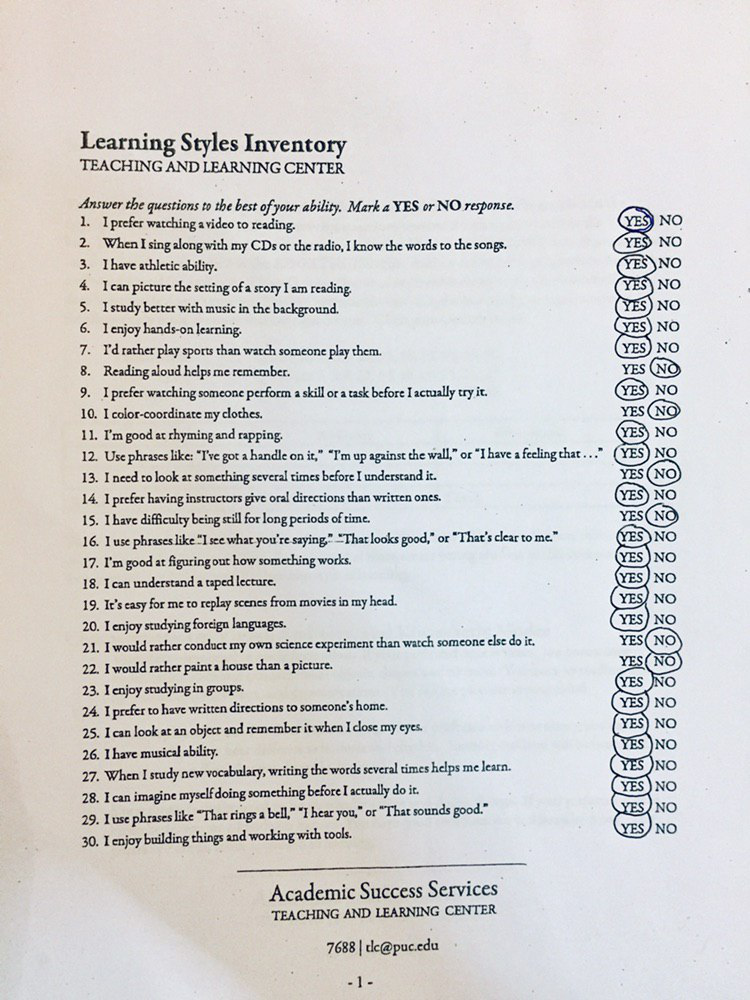
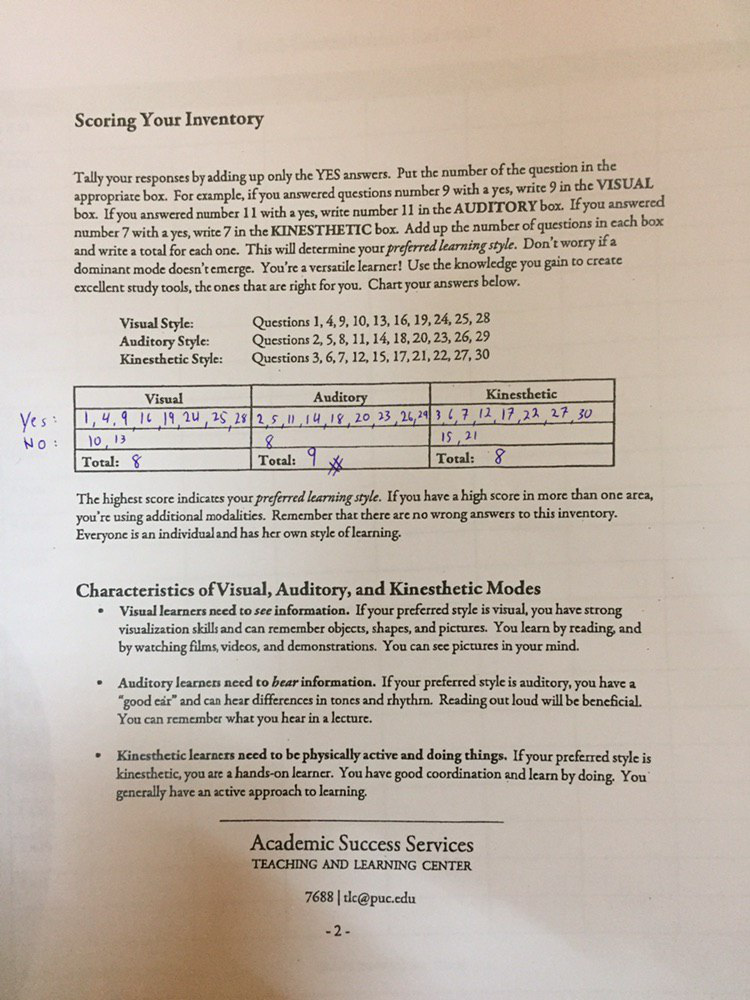
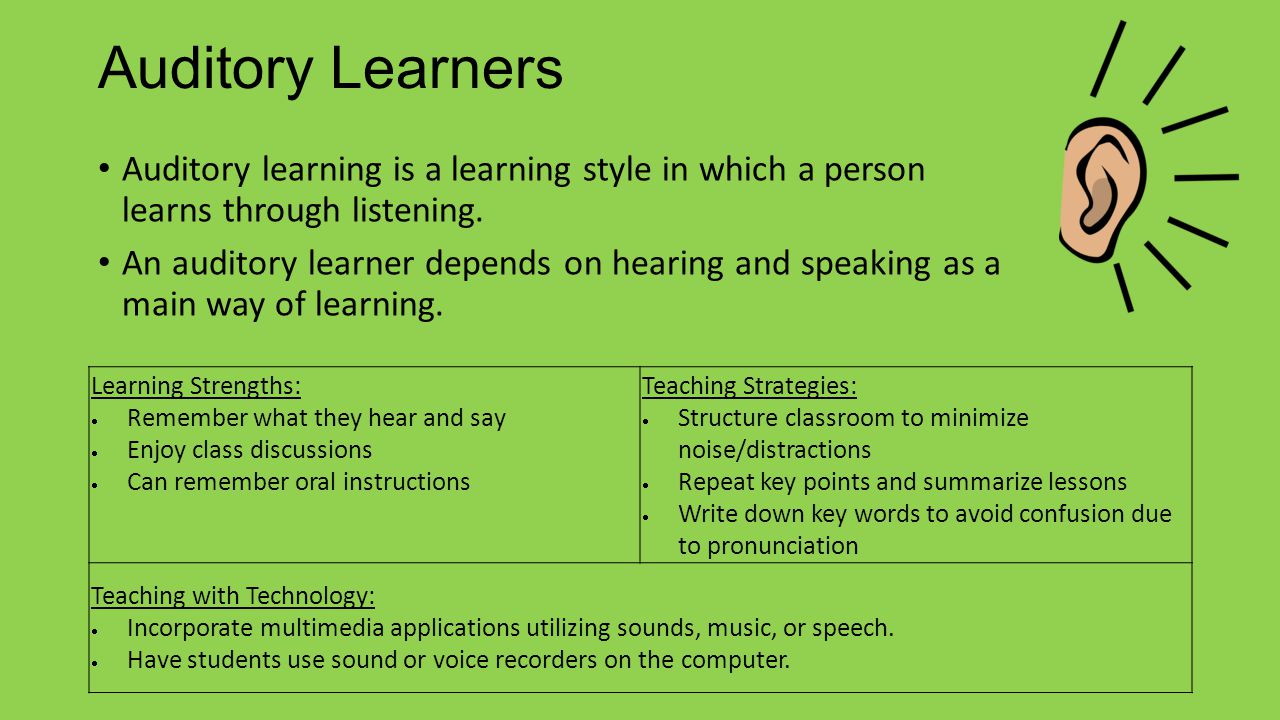
From what i did in the table above, the results show that i am dominant in the characteristic of auditory mode. I need to follow this way of learning in order to help me understand something effectively. Maybe i need to understand the auditory style more deeply and do dome research on it. Here are some tips on how to study for students who are their learning style is auditory type.

Auditory – While those who hear the bark are probably auditory learners. Auditory learners learn best by listening and remember when information is presented in a poem, song, or melody.
TOPIC 2 – GOAL SETTING

What are goals?
Goal are the final points towards which we direct our hardwork.
In others word, goals are things that we want to achieve and we aim for because we pursue a course with our action. We can make your academic performance by learning to set goals that motivate you to do well and that will increase your chance for success.
Goals also are divided by two term.
Long-term goals are the objective that you set for yourself for the end of the year, for four or five years from now or even for a lifetime. For example, getting married, get the title Ir for engineer or get the title C.A for accountants.
Short-term goals can be set up for an-hour from now, for the end of the day, week, month or term (or semester). For example, completing the reading assignments, writing an essay, getting B in a course or getting Dean’s list for that semester. Your short-term goals sometimes can be step toward achievingthe long-term goals you’ve set for yourself.
A “good” goal statement is SMART:
Specific: The goal statement should indicate what should be accomplished. It should be phrased using action words (like “design,” “sell,” “build,” “implement,”).
Measurable: The goal statement should clearly state what will be achieved and when it will be achieved?If you can measure the goal, you can dtermine if you have accomplished it. If the goal is accomplished, the project is a success.
Acceptable: Does everyone in the organization agree that the goal is necessary and desirable? Is the objective acceptable to managers and KEY stakeholders?
Realistic: This means the goal can be accomplished, but it is probably challenging. Is the goal/objective achievable?
Time bound: A goal should specify a deadline and time horizon.
Five Steps To Approach Goal Statements:
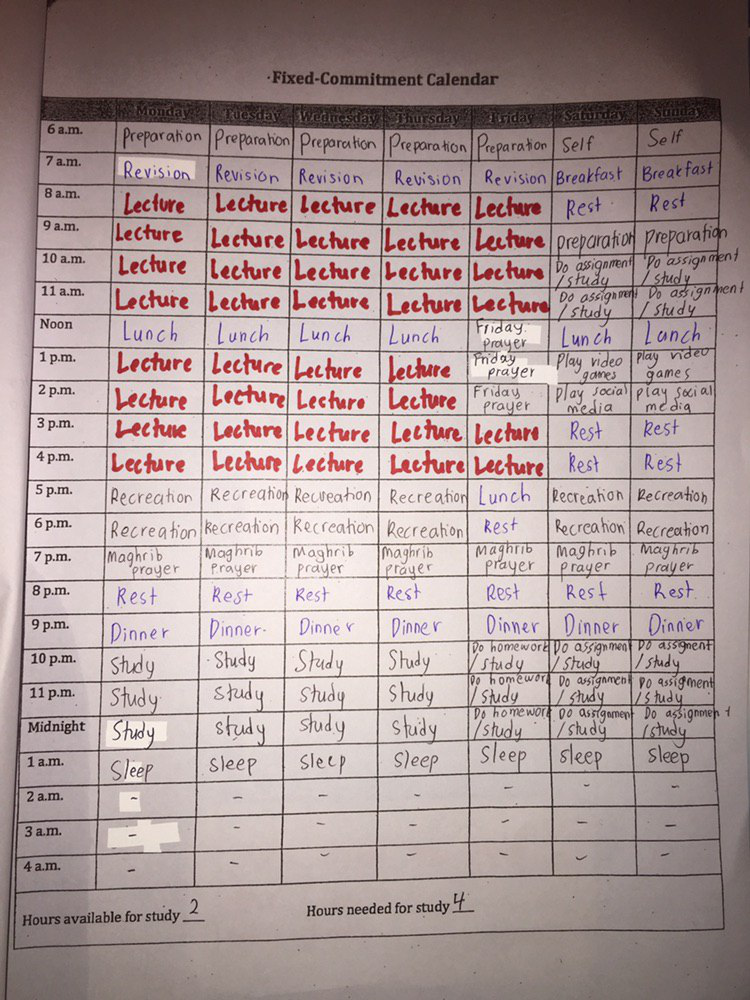
As a full time student, i need a fixed calender to make sure i manage my time wisely because time is a stubborn illusion. By having a fixed calender i have the ability to use one’s time effectively or productively, especially at university.
Job Task Analysis (JTA) surveys are used to analyze what tasks within a job role are most important. They are often used to construct and validate certification programs, to ensure that the questions being asked are relevant to the job.
JTA assessments enable organizations to get direct feedback from key employees and stakeholders about their day-to-day duties and provide insight into different dimensions of specific tasks, such as:

The table above shows the activities i do to prevent myself from wasting my time by doing worthless things.
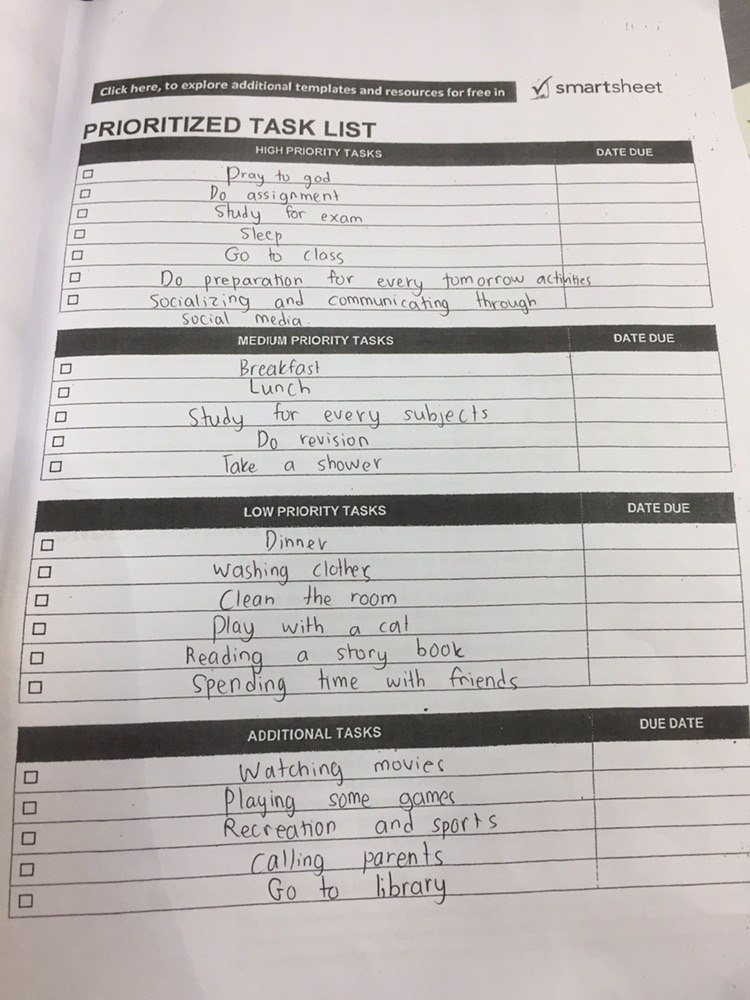
This task list is important to distinguish the high priority task and the low priority task. With this task list, i can manage my time to do all the task without rushing.
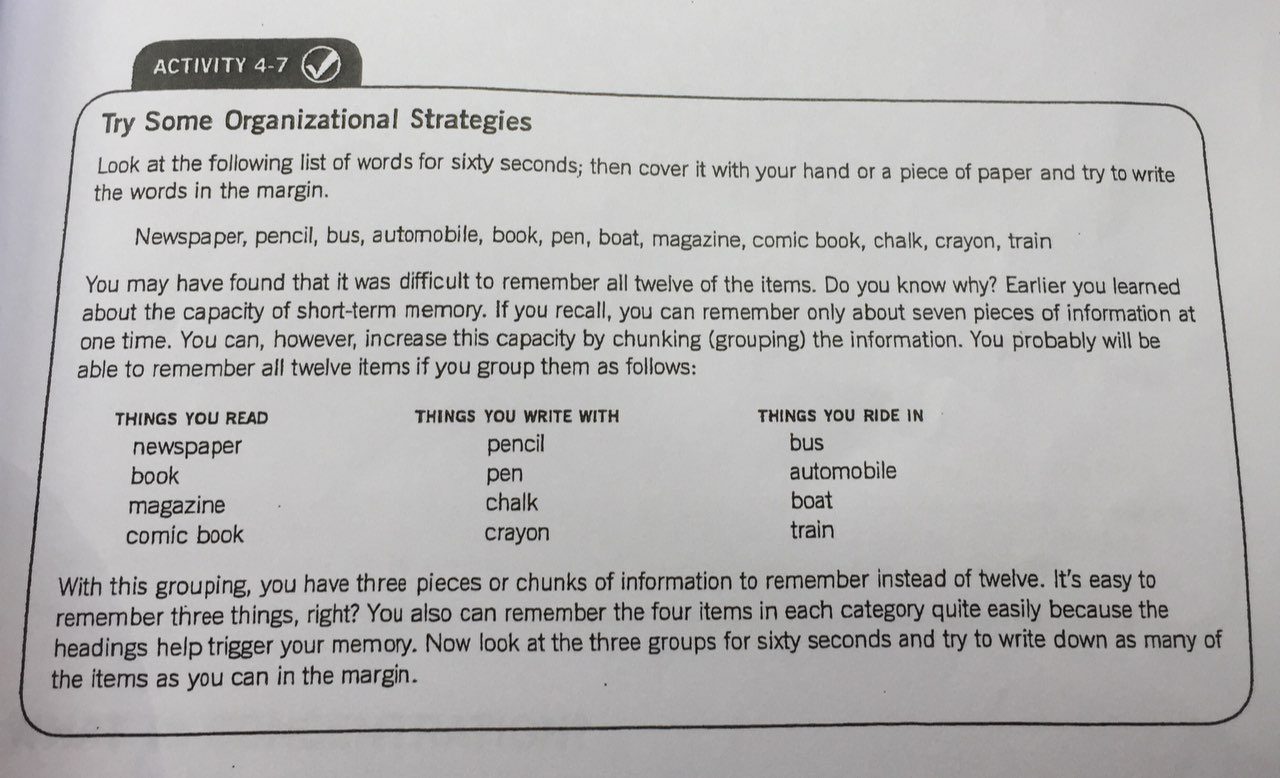
ACTIVITY 6 – MEMORY STRATEGIES
What is memory?
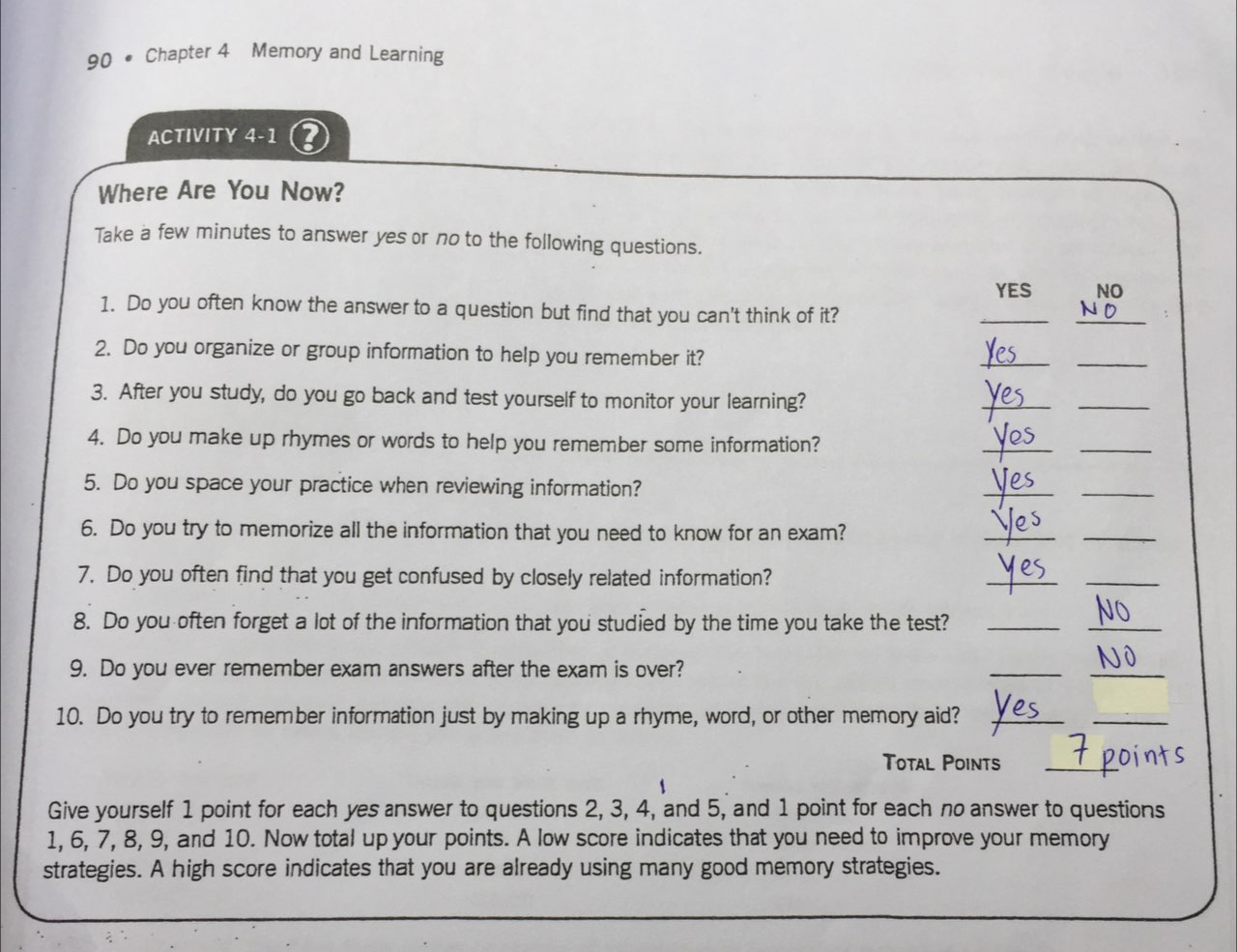
Memory is something that we need to remember and keep it in our mind.
For example, we need to remember all the things that we learn from lecturer. But, some students have a problem to remember all the things that they have learned. So, we need the memory strategies to remember easily of what we learn.
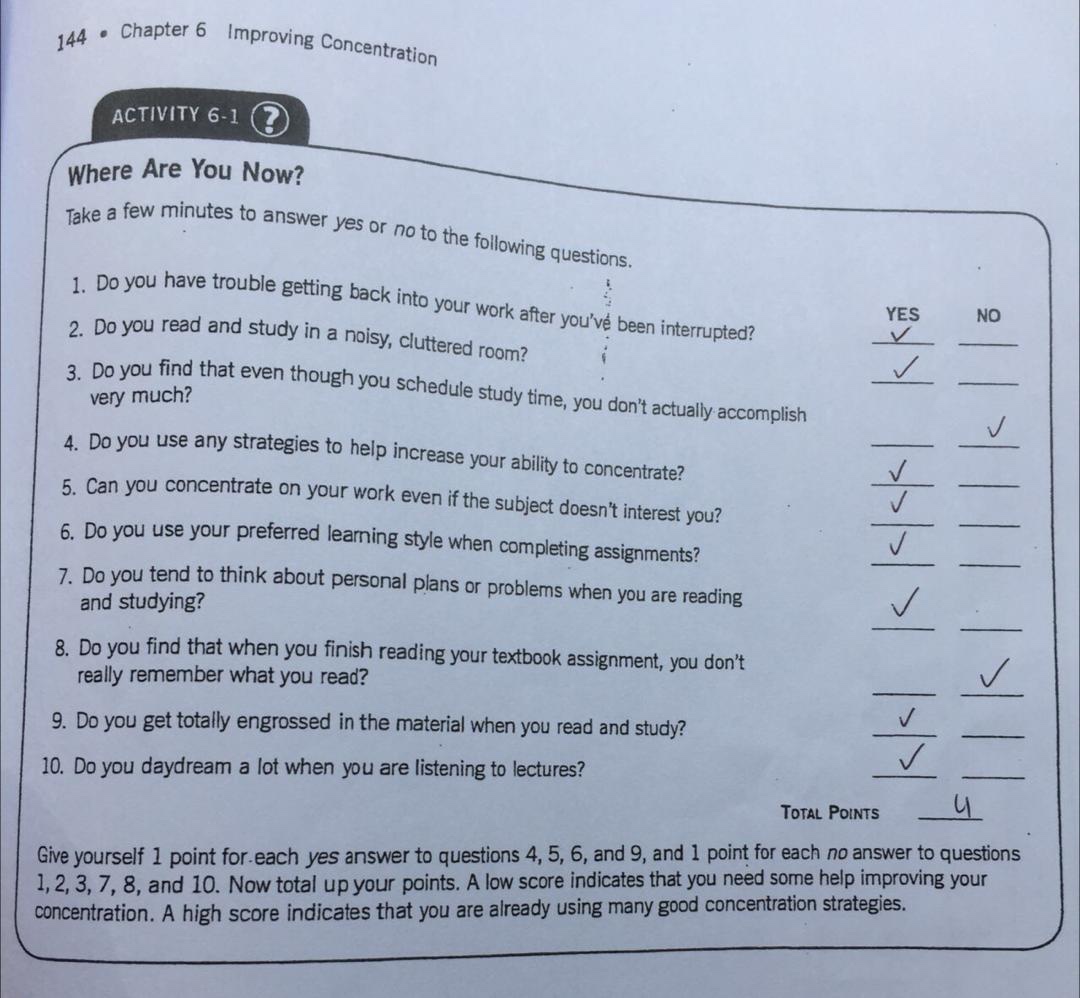
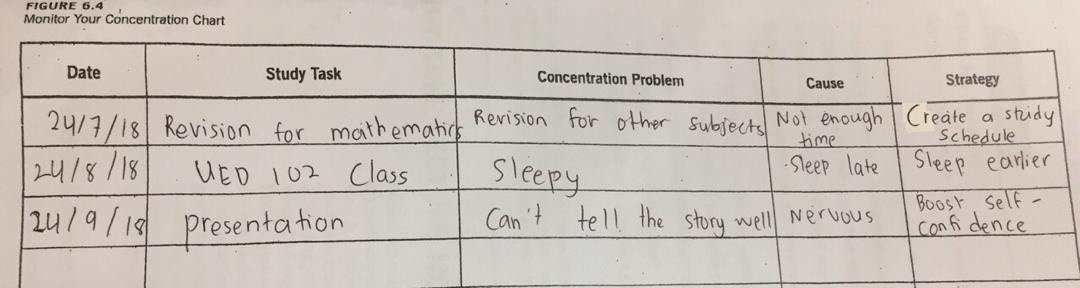
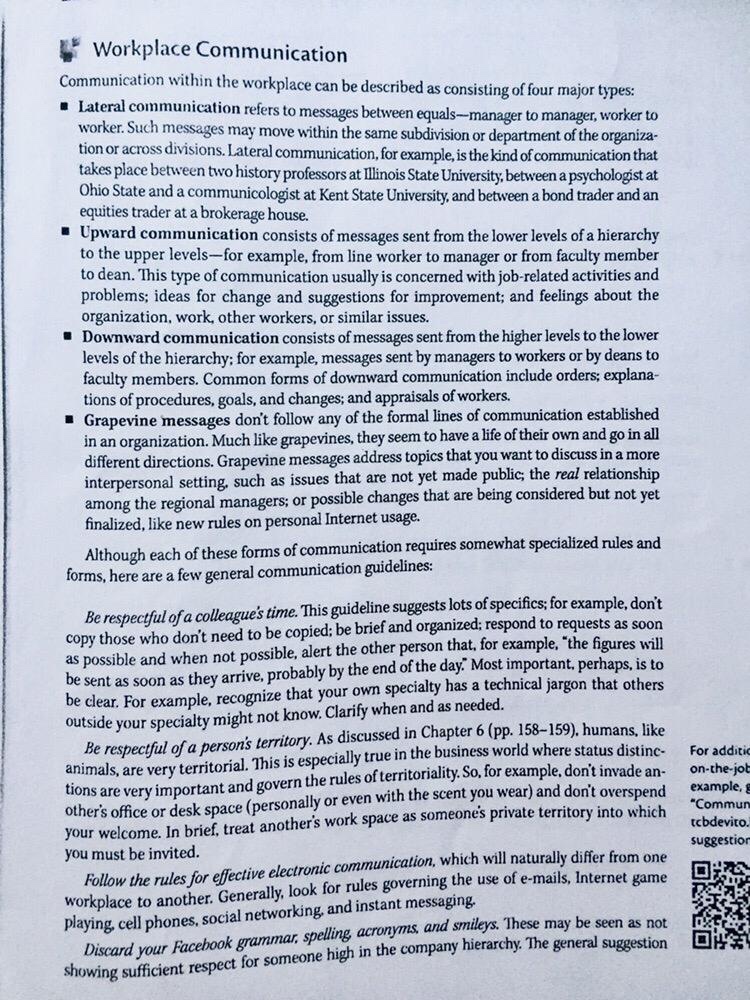
ACTIVITY 8 : CONCENTRATION STRATEGIES
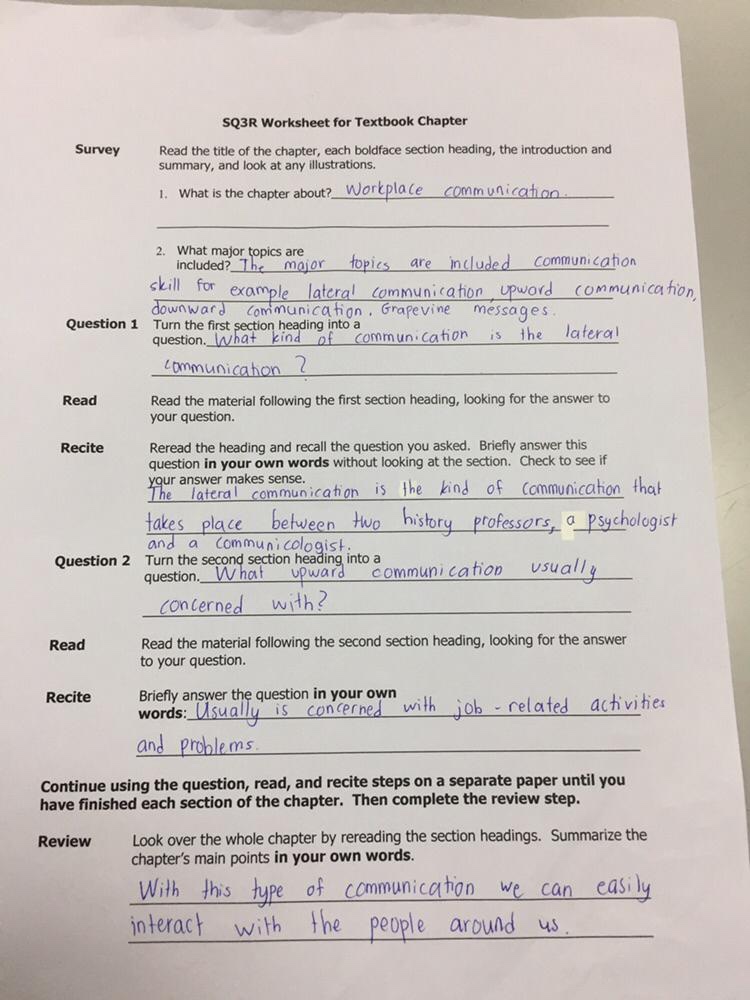
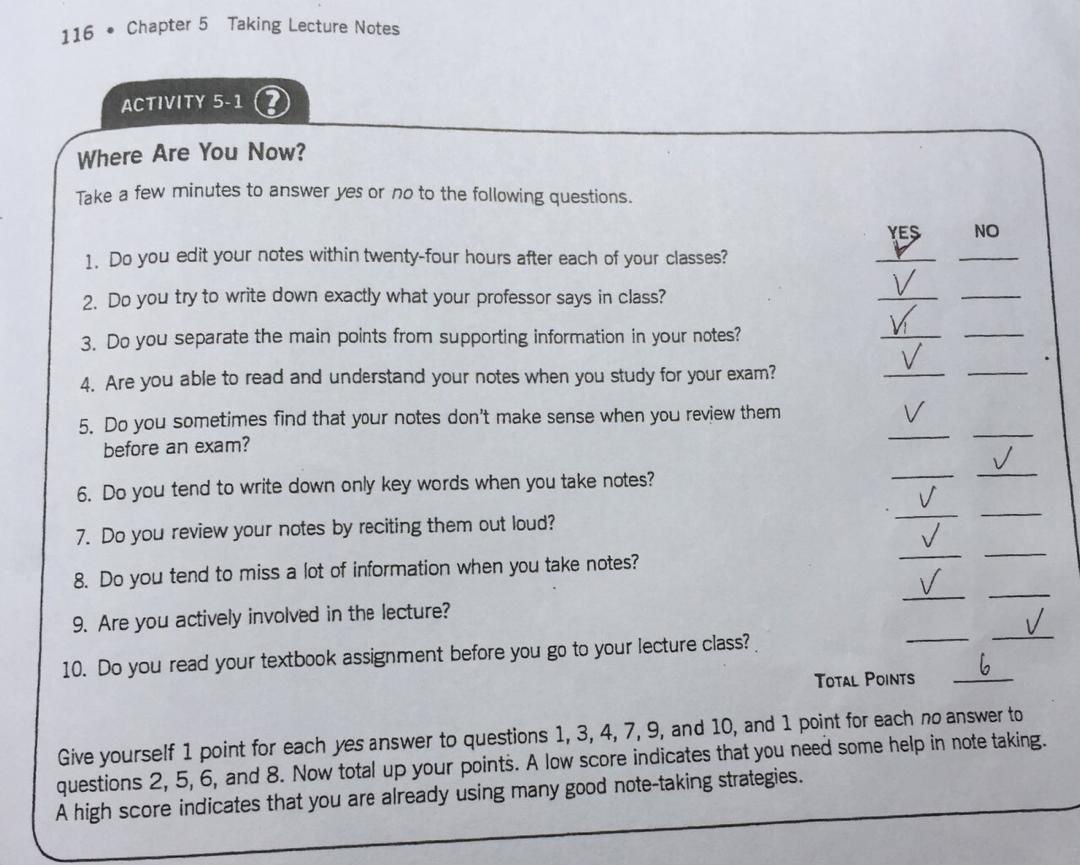
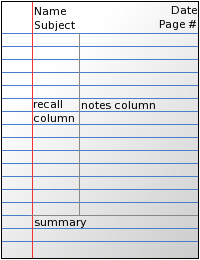

This is an example post, originally published as part of Blogging University. Enroll in one of our ten programs, and start your blog right.
You’re going to publish a post today. Don’t worry about how your blog looks. Don’t worry if you haven’t given it a name yet, or you’re feeling overwhelmed. Just click the “New Post” button, and tell us why you’re here.
Why do this?
The post can be short or long, a personal intro to your life or a bloggy mission statement, a manifesto for the future or a simple outline of your the types of things you hope to publish.
To help you get started, here are a few questions:
You’re not locked into any of this; one of the wonderful things about blogs is how they constantly evolve as we learn, grow, and interact with one another — but it’s good to know where and why you started, and articulating your goals may just give you a few other post ideas.
Can’t think how to get started? Just write the first thing that pops into your head. Anne Lamott, author of a book on writing we love, says that you need to give yourself permission to write a “crappy first draft”. Anne makes a great point — just start writing, and worry about editing it later.
When you’re ready to publish, give your post three to five tags that describe your blog’s focus — writing, photography, fiction, parenting, food, cars, movies, sports, whatever. These tags will help others who care about your topics find you in the Reader. Make sure one of the tags is “zerotohero,” so other new bloggers can find you, too.
 Maigad Amir UED 102